
Beyond the Wash
The Difference Is in the Process.
Not every wash is the same. Understanding how your vehicle is cleaned is an important part of caring for its finish.
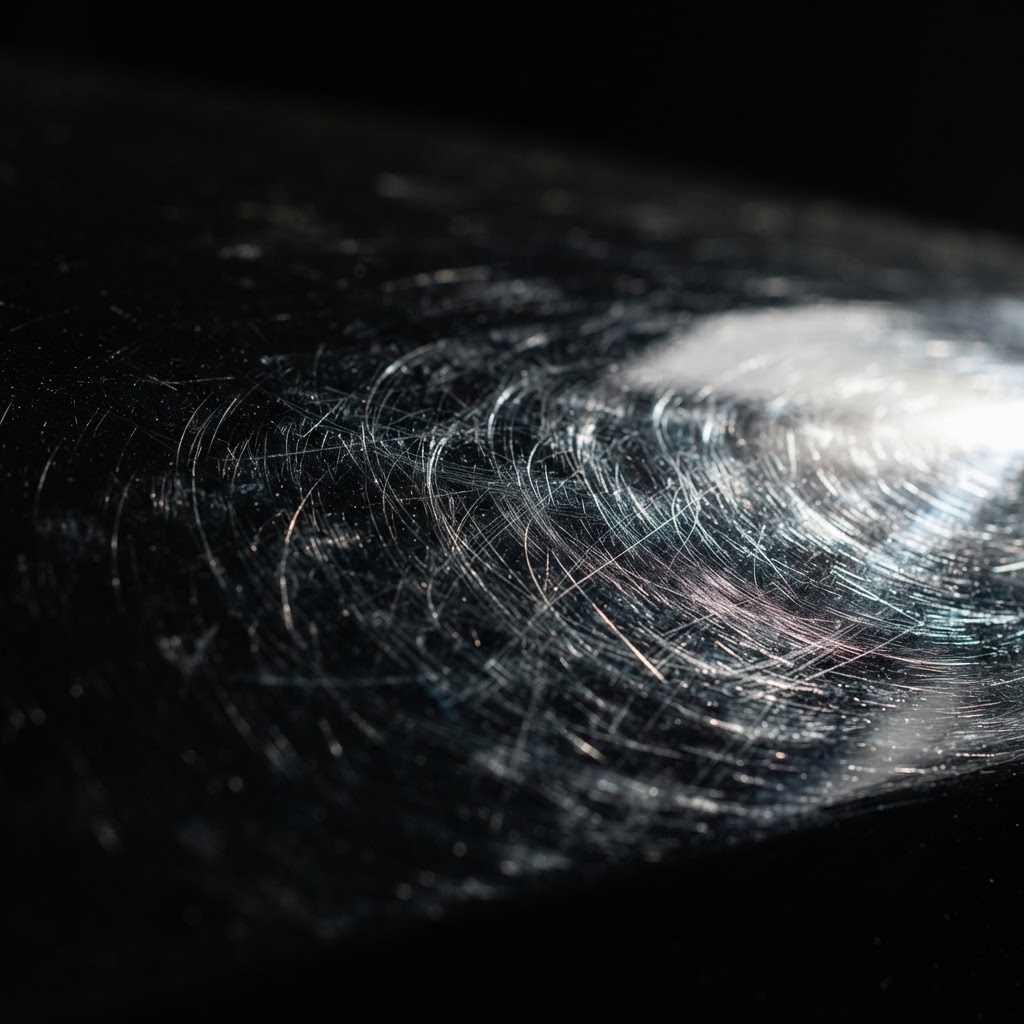
Automatic Brush Washes
Convenience Has Its Trade-Offs.
Automatic brush and soft-cloth washes provide convenient routine cleaning. However, when washing materials are dirty, worn, or poorly maintained, they can carry abrasive contaminants across painted surfaces. This may contribute to fine scratches and swirl marks.
Not every automatic wash affects every vehicle the same way. The condition of the equipment, how well it is maintained, and the washing practices in use all matter.
- Shared washing equipment used across many vehicles
- Contamination carried in brushes or cloths
- Fine surface scratches
- Swirl marks that become visible under sunlight
- Limited attention to individual vehicle conditions
Touchless Automatic Washes
Less Contact. Different Limitations.
Touchless washes avoid the physical brush contact associated with traditional automatic washes. This can reduce contact-related scratching risks, but touchless systems may struggle to remove stubborn road film, embedded dirt, or heavier contamination.
Reducing contact is not the same as providing a comprehensive clean. Touchless chemistry varies widely, and how well it works depends on the products used, their concentration, and how the wash is operated.
- No physical brush or cloth contact with the paint
- Reduced contact-related scratching risk
- Road film and embedded dirt may remain
- Heavier contamination often needs a more thorough approach
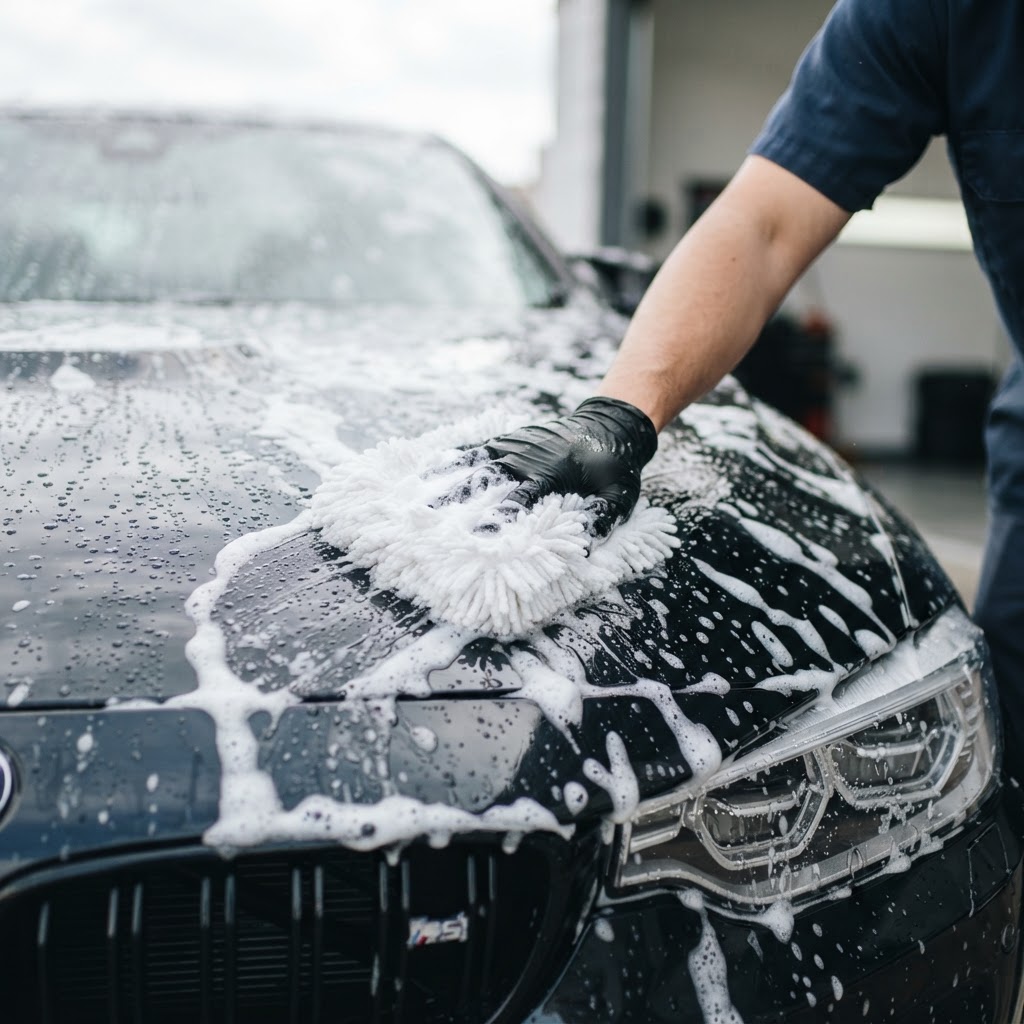
Proper Hand Washing
Care Begins With the Method.
Hand washing gives us control over the process, from the products used to the contact made with every panel. Done properly, it allows dirt to be lifted away rather than dragged across the paint.
Hand washing is not automatically safer simply because a person performs it. The benefit comes from proper technique, clean equipment, and genuine care — improper hand washing can scratch paint just as easily as poorly maintained equipment.
Our process uses a two-bucket wash with clean media, a foam pre-soak to loosen dirt before contact, and careful drying, including microfiber blow-drying to help prevent water spots. Delicate materials and finishes are handled with products and tools suited to them.
- Appropriate pre-rinsing
- Vehicle-specific cleaning products
- Clean wash media
- Controlled contact with painted surfaces
- Separating dirt from the cleaning process
- Safe drying practices
- Attention to delicate materials and finishes
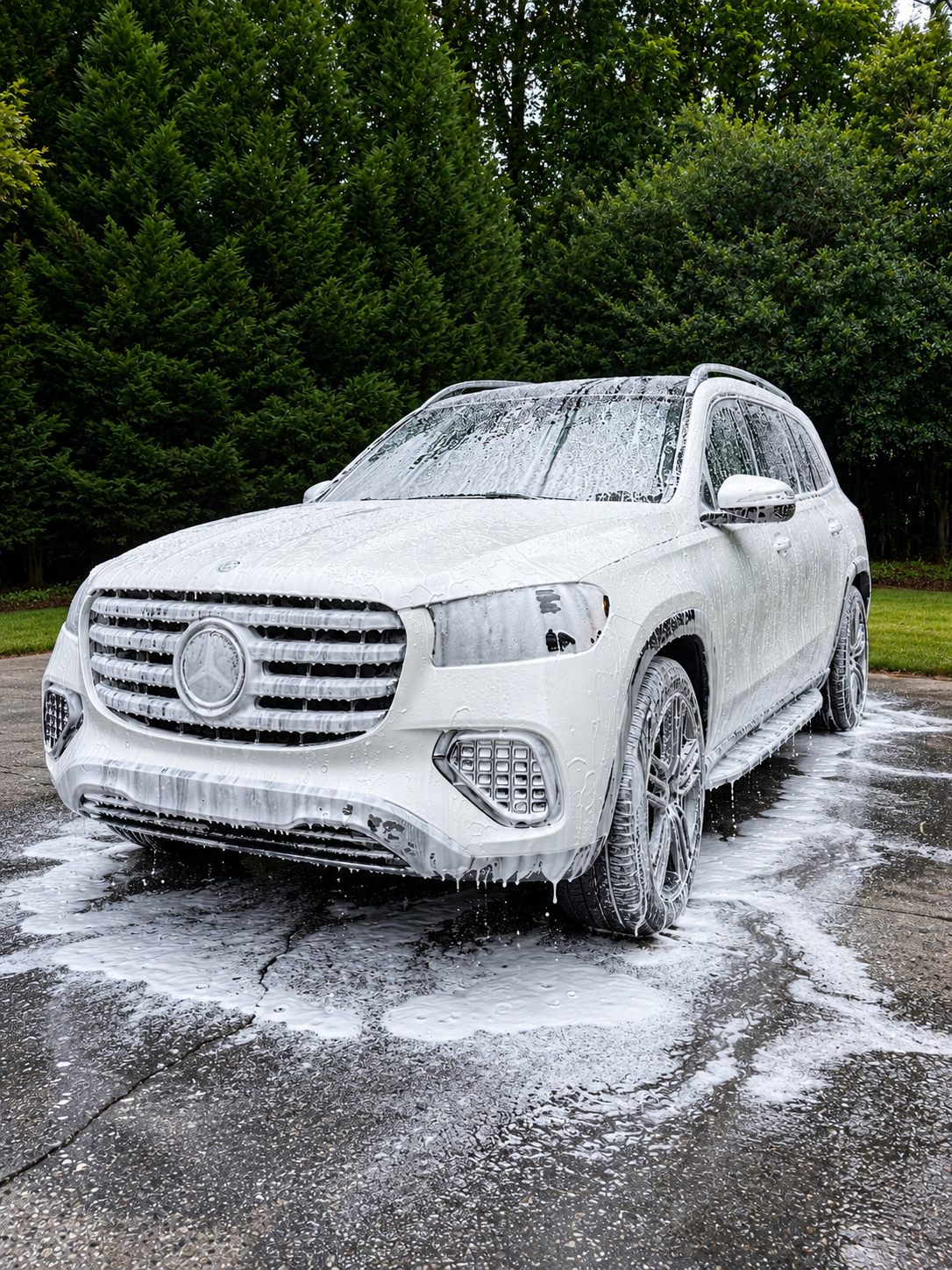
Our Process
Care in Every Step.
From the first rinse to the final finish, every step is approached with purpose. Carefully selected products and thoughtful techniques help us care for your vehicle’s finish.
Swirl Marks
The Imperfections You Notice in the Sun.
Swirl marks are fine surface scratches that can become particularly visible under direct sunlight or focused lighting. They may result from improper washing, drying, or other contact with contaminated materials.
- Swirl marks typically build up gradually from repeated contact with dirty or contaminated materials, rather than from any single wash.
- Fine scratches scatter light, which can reduce the clarity and sharpness of reflections in the finish.
- Paint correction is a separate service. Where appropriate, polishing can improve certain surface imperfections.
Over Time
What Happens Over Time Matters.
Fine Scratches & Surface Marring
Repeated contact with contaminated materials can gradually add fine scratches, and over time that can reduce the clarity of the finish.
Contamination
Road film, environmental fallout, and bonded contaminants can build up beyond what a routine maintenance wash removes, and may need a more thorough cleaning.
Protective Treatments
Appropriate maintenance helps waxes, sealants, and ceramic coatings perform as intended and last as long as the products allow. Coatings support protection and easier cleaning; they do not make paint scratch-proof.
Paint Correction
Correcting certain scratches may require polishing, which removes a small amount of paint or clear-coat material. Because that material is finite, minimizing avoidable scratching is preferable to repeatedly correcting it.
Compare
Not All Vehicle Care Serves the Same Purpose.
Each method serves a different purpose. The right choice depends on your vehicle’s condition and what you are trying to achieve.
| Category | Automatic Brush Wash | Touchless Wash | Careful Hand Wash | Professional Detailing |
|---|---|---|---|---|
| Convenience | Fast and widely available. | Fast, with minimal contact. | More time and care required. | Appointment-based, with the most time spent per vehicle. |
| Cleaning depth | Removes light surface dirt; results depend on equipment and maintenance. | Handles light dust and film; may leave heavier bonded contamination. | Thorough when proper technique and products are used. | Deepest clean, adjusted to the vehicle's condition. |
| Attention to individual surfaces | Generalized coverage; little attention to specific areas. | Generalized coverage. | Can be focused on specific areas as needed. | Surface-by-surface attention across the whole vehicle. |
| Contact-related risk | Shared brushes or cloths can contribute to fine scratches, depending on their condition and maintenance. | Reduces contact-related scratching; not entirely free of risk in all cases. | Low when technique, wash media, and equipment are clean and appropriate. | Managed process with clean media and careful, controlled contact. |
| Interior cleaning | Not included. | Not included. | Exterior only unless arranged separately. | Interior cleaning available depending on the selected package. |
| Paint decontamination | Not addressed. | Limited removal of bonded contaminants. | Removes loose surface contamination only. | Clay decontamination available with select packages. |
| Protection options | Occasional basic wax options. | Sealant or wax add-ons vary by location. | Protection can be applied separately. | Sealant or ceramic coating depending on the package. |
| Condition-specific treatment | Not tailored to the vehicle's condition. | Not tailored to the vehicle's condition. | Some flexibility for specific concerns. | Adjusted to condition; paint correction available where appropriate. |
Convenience
Fast and widely available.
Cleaning depth
Removes light surface dirt; results depend on equipment and maintenance.
Attention to individual surfaces
Generalized coverage; little attention to specific areas.
Contact-related risk
Shared brushes or cloths can contribute to fine scratches, depending on their condition and maintenance.
Interior cleaning
Not included.
Paint decontamination
Not addressed.
Protection options
Occasional basic wax options.
Condition-specific treatment
Not tailored to the vehicle's condition.
Availability of services such as clay decontamination, polishing, ceramic coating, or interior extraction depends on the selected package. Not every service is a complete restoration.
The Easom Approach
A More Deliberate Approach to Automotive Care.
At Easom Detailing Co., our approach is built around genuine automotive enthusiasm, carefully selected products, and attention to the smallest details. We believe proper vehicle care starts with understanding the surface, choosing the appropriate process, and taking pride in the result.
Every product we use is chosen for how it performs on real vehicles rather than for price or convenience — the same products and methods we trust on our own cars. See the products we use.
Common Questions
Answers to What We’re Asked Most.
Are all automatic car washes bad?
No. Quality and maintenance vary. The greatest concern with contact washes is poorly maintained or contaminated washing equipment.
Are touchless washes safer?
They avoid physical brush contact and can reduce associated scratching risks, but may not remove all stubborn contamination.
Is hand washing always better?
Not necessarily. Improper hand washing can also scratch paint. The technique and materials used are what matter.
Do I need a complete detail every time my car is dirty?
No. Proper routine washing and maintenance may be sufficient between more comprehensive detailing services.
Can detailing remove existing scratches?
Some surface imperfections may be improved through appropriate paint-correction services. Not every scratch can be safely or completely removed.
Will ceramic coating prevent scratches?
No. Ceramic coatings provide certain protective and maintenance benefits, but they do not make paint scratch-proof or damage-proof.
Ready to Care for Your Vehicle Properly?
Tell us about your vehicle and we’ll review its condition, recommend the right service, and confirm your appointment.